Hey Chuck,
All
you cruising guys seem to talk about is the Bahamas, the Caribbean or the
Intracoastal Waterway. How about someplace else close enough to get to for
a change?
Been
there done that in Ft. Lauderdale.
Dear
Been there done that,
You
may be right! Seems like cruising is getting just like driving on the
interstate, only instead of going from one air-conditioned hotel to
another its going from one full service marina to another.
On
the other hand, there is still plenty of adventure to be had, right close
to home. The following is a case in point
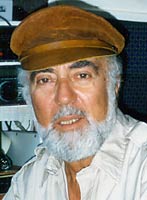
Chuck Kanter, AMS has over 20 years experience as a yacht surveyor specializing in multihull vessels, sailing vessels and small craft. He is a recognized authority and featured speaker on cruising in catamaran sailboats. His new book, Cruising in Catamarans, will be available this summer! Check out his website: www.sailcopress.com
A
Short Adventure In Cuba
On 20 June 1998 we finished assembling the sheaf of papers we needed to be
bonafide journalists visiting Cuba. Our mission was to write about boating
facilities on the North Shore. Required papers consist of a license from
the United States Treasury Department and permission from the US Coast
Guard to cross the security zone which is established at the Cuban
twelve-mile limit. These papers allow us to legally spend money in Cuba.
As an American Citizen, you can legally go to Cuba but you are not legally
allowed to spend ANY money; that would be trading with the enemy.
At 18:10 hours, 23 June, we left our dock in Marathon, Fabulous Florida
Keys, heading for Varadero a resort area on the North coast of Cuba and
due south of Marathon. Actually it is the closest direct distance between
the two countries. The measured distance from Sombrero Light, the outer
limits of continental United States (if the Keys are actually in the
continental United States) to Cayo Piedras Del Norte, the northernmost
island aid to navigation in the Varadero area is ninety nautical miles.
Conditions were light to moderate with southeasterly winds at five to ten
knots and two to four foot seas, higher in the Gulf Stream. Our course was
roughly 95 degrees varying with the strength of the Gulf Stream which
flows at approximately 45 degrees thus impeding our progress by about one
knot or so depending upon our location.
We deliberately embarked early evening to sail through the night in order
to arrive in Cuba during the day. Landfall in a strange place at night,
especially a politically sensitive place, is not prudent seamanship. My
only apprehension in sailing across and back to the USA is that we might
come upon people in rafts. People are still fleeing Cuba in impressive
numbers.
We would definitely stop, give water and food if needed. June is right in
the middle of "rafting season" and being Keys people, we are
well aware of the large numbers. We are also well aware of the high
percentage that do not make it and perish at sea.
At 14:30 hours, 21 June we entered Varadero at the main channel for Marina
Acua. It is a well-marked channel with breakwaters on both sides and range
marks on land, an easy and safe landfall.
Two enormous hotels provide an easy landfall far out to sea, just like
Miami Beach. We had logged 125 miles in 20 hours giving us an average
speed of 6.25 knots and had seen a total of six large ships, none really
close by and no official vessels, helicopters or aircraft of any kind.
The cruising guides suggests calling both the officials and the marina on
channel 16. After continuous trying with no response, I asked over the
radio for an English speaker and still got no response. Finally, we pulled
up to the marina dock and Armando, the dockmaster graciously guided us
into a suitable slip at the head of the dock. In a moment, the officials
were there.
This was our first experience in a Communist country and we were both
curious and apprehensive. There was no need to be. The officials were
delightful and even though we spoke no Spanish and they spoke no English
we got along fine, clearing in went well. Armando speaks excellent English
and helped us with translations. However, clearing in is considerably more
expensive than other Caribbean nations, it cost us a grand total of $90
for all required permits, visas and exit fees.
They did not stamp our passports, visas were a separate document. This was
somewhat offset by the fact that the marina only charged us $.35 per foot
because we did not use any electricity.
The Cubans are very fussy about garbage, water pollution and importing
fresh eggs and chicken. Since we had neither eggs nor chicken, we had no
problem. Interestingly, they made us peel our hard-boiled eggs and they
confiscated the shells. The lady in charge of the Agricultural clearance
had never seen hard-boiled eggs before and did not know what to make of
them. They left us with pages of instructions about disease control and
waste disposal. It is excellent, well-written material in good English.
The island has much the same vegetation as the Florida Keys and they are
very fond of Royal Poinciana; the lush, flaming red trees are everywhere.
Fruit trees such as mamey, papaya, mango and guava are in abundance. In
the east, spectacular mountains dominate everything. The Atlantic (north)
coast, especially the Varadero peninsula, have incredible beautiful
beaches. The savannah areas are lush green. Crops are seen everywhere and
the dominant rural nature of the nation is quite evident.
The North coast of Cuba, from Varadero west to Marina Hemingway is not the
most inviting cruising ground. There are few little places to duck in and
anchor and it is required to clear in and out of every port, just like so
many other Latin nations. Based upon that, and the fact that unlike the
Dominican Republic or Puerto Rico where almost everybody speaks some
English or at least "Spanglish" in Cuba, you really need to know
some Spanish; we decided to tour the country by bus and train rather than
risk the potential problems with Cuban gunboats along that sensitive
section of the north shore, the hassle of checking in and out of every
port and the need to beat back upwind to get home to Marathon.
Comfortably ensconced at Marina Acua, we put our folding bikes ashore and
biked the entire peninsula of Varadero. Each morning around 630 a.m. which
for us is the best part of the day, we enjoyed watching the Cuban boys and
girls in rowing shells. Varadero is very much like the Fabulous Florida
Keys in the fact that it has a single main road down the center with
beaches and resorts on the ocean side and homes and waterfront businesses
on the bay side. However, there is one major difference: a toll booth at
the entrance to the peninsula.
Gathering the courage to set out into the interior and away from the
resorts, we took a local bus to the port city of Matanzas. No tourists
there. After wandering around Matanzas getting conflicting instructions,
mostly in sign language, we finally arrived at the train station. (ferrocarilles)
The fare from Matanzas to the far end of Cuba, the fabled city of Santiago
de Cuba, oldest city in the new world, was US$27.50 each.
The Matanzas station itself was a huge warehouse-like structure on a
raised platform. Security in the train station is similar to that of an
American Airport. I could see no apparent reason for this tight security
and was perplexed by police and soldiers asking for ID from the locals and
visas from us. In addition, the trains did not stop at the building or any
other platform. You had to walk across the gravel track-bed and climb up
onto the train from the gravel. The first step is a real killer. I had to
climb onto the train knees first and then haul Corinne up.
The trains themselves are really museum pieces, I am certain Hemingway
rode on this one. The one we were on was built in 1936 and had the worst
latrine facilities we had ever experienced. There is no air-conditioning
and almost everyone in Cuba smokes; thus during stops when there was no
stream of air blowing in the open windows, the air was less than pleasant.
Riding a train across country is an extraordinary experience. It gave us
opportunity to see, taste and feel the reality of Cuban life and meet some
interesting people.
We met doctors, engineers, boxers, musicians, school teachers, students,
factory workers and a good cross section of Cuban citizens. At each stop
vendors would appear alongside the train selling all sorts of items from
fresh fruit to roasted peanuts thru wonderful fresh chichones (pork
rinds).
Santiago de Cuba is a magnificent city built on the many hills overlooking
the harbor. It is very reminiscent of San Francisco, California. We walked
the streets, went into all the stores, did both tourist things as well as
dealing with the public. Cuba is truly the land of the ‘57 Chevy. These
old cars are a monument to human ability to make do. The Cubans must be
the World's most ingenious mechanics.
Rather than stay in a hotel, we stayed at a "casa particular"
which is the Cuban equivalent of our bed & breakfast. This one, in
midtown Santiago de Cuba, was run by a young doctor and his wife,
Javier and Marie. They even gave us a tour of their place and the
scene from the rooftop was marvelous. It cost US$15.00 per night,
including breakfast. Now that's a real bargain.
Having been forewarned about the lack of what we Americans consider
basics, Corinne prepared little gifts of pencils, aspirin and canned food
items. As expected, they were always well received.
Among these items was a big bag of dried fruit which she shared with
fellow passengers on our train ride back to Matanzas. Most had never
experienced dried fruits before and it wasn't long before Corinne had the
that section of the train car enthralled with identifying the various
fruits.
Many had never ever tasted an apple or a pear; this was their first
experience. It wasn't long before questions began to arise on how the
fruit got dried in the first place. Cuba has an abundance of fruit and
drying would make good sense.
Looking like a Peter Sellers movie, complete with flailing arms, lots of
nonverbal expressions and highly animated discussion, Corinne held court
in English, trying to explain to people who only spoke Spanish, how fruit
was dried on trays in the sun.
There were three lady school teachers from Columbia who joked and laughed
and made the entire scene the warm human comedy that it became.
Surprisingly, after much discussion, translation through several dialects,
much pantomime (two young men who helped were from Barcelona) many
scratched diagrams on scraps of paper, the lessons were learned and a good
time was had by all. When the Cuban boxing team got on board at Santa Rosa, they
joined in the festivities and it wasn't long before a guitar and a bottle
of rum emerged and we all wound up singing Quanta La Maya, the only song
we all knew.
After returning from Santiago de Cuba, we regrouped and took a tourist bus
to Havana. Being a pampered tourist in an air-conditioned bus and having
an English- speaking guide take you to all the "proper" spots is
a radically different experience than backpacking.
Havana is a magnificent city. The architecture, art work and museums bring
you back to antiquity and a stark realization of our common threads of
history. Much art work and architecture is well preserved in the cemetery.
Incredible sculpture and monuments abound. Unlike so much of the main
thoroughfare where 18th and 19thcentury rococo buildings are crumbling to
rubble. (This destruction of a precious architectural heritage is heart
wrenching)
One must remember that Cuba was a flourishing society for 300 years before
there was an "Estades Unidos" (US). It's hard to think of
Americans as parochial, but in so many ways we are. How many know that the
Spanish Armada was built in Cuba? There are magnificent 16thand 17th
century buildings all through Cuba and the oldest building in the western
hemisphere is in Santiago de Cuba. (It is still in use as a tourist
attraction)
Due to an emergency at home, our stay was cut short. We departed Varadero
0630 hrs., 03 July. The sail across the Gulf stream was brilliant. No
ships, no rafters (our greatest fear) no official vessels, no yachts and
no fish were sighted.
Lines trolled in both directions produced not a single hit, and only one
small pod of Porpoise surfaced for us. Amazingly, a flying fish
"flew" into our boat through the rear-facing top hatch and
landed in our bed. Flying fish have landed on deck before but this is a
first for our bedroom. The top hatch is six feet off the water and if they
do not really fly, then how did they get there upwind? (still can't figure
out how it did it)
At 18:00 hrs our ever dependable La Forza cleared Sombrero light,
Marathon. 1930 hrs we were tied to our dock having logged 91 nautical
miles in thirteen hours for an average speed of seven knots. What time was
lost to the gulf stream on the way over, was made up plus a little on the
way back.
We cleared customs without a hitch but were admonished to clear properly
next time, in Key West. I was not anxious to add an additional fifty mile
beat to our trip and customs understood. Having the right papers helped
enormously. Customs actually drove from Key West to Marathon when we could
not reach them on their "800" number. The initial call to
customs was made on our cell phone. Instructions were to call from a
land-line when actually tied up. Ha! The 800 number was busy for so long
that customs made it up from Key West to Marathon before the 800 number
phone was answered.
Agriculture and immigration were cleared by phone from home, the following
Monday. They weren't particularly happy, but again, having the license
from the treasury department was a big help. It is also very important to
have paid your twenty-five dollars US Customs fee and have obtained the
decal. The decal number really does smooth the process.
A few observations about Cuba and the Cuban people, away from the tourist
traps and flesh pots of the big cities and heavily tread roads.
Walking down the streets in the Cuba we visited was quite a different
experience and takes some personal adjustment. First and foremost, people
are polite. Noticeable by their absence are "type A"
personalities. We never experienced a rude person. Traffic is very light.
Most cars are publicly owned and the drivers courteous. We actually saw no
luxury cars although there was a Mercedes-Benz service center next to our
marina. (That service center also sported a new Kohler generating plant)
There are no beepers, walkman, cell-phones, suits & ties,
air-conditioning, handicapped parking spots, bikini clad hotdog vendors
nor dirty streets. The skyline is void of transmission towers. Crime is
almost unknown. There are no overweight people. Beards are significantly
missing. In our entire Cuban sojourn we met but one Cuban with a beard.
Whether or not this is a "political statement" I could not
ascertain.
There are plenty of bicycles, mostly rugged Chinese made. Cubans ride them
in creative ways. Wives sit side- saddle on rear luggage racks, others sit
on handle bars or cross bars. There are horses everywhere. Many of the
taxis are horse-drawn. There are antique surreys and various types of
wagons. The horses look beautiful and very well kept. So many things we
take for granted here in the US are done by manual labor in Cuba.
We saw no mechanical street sweepers or lawn mowers. Roadside shoulders
were grazed by live stock tied to long lines with a sliding ring on a
short leash. Men with machetes kept brush down. There is no debris or
trash on the roadsides. Obvious care is given to esthetics and planting.
Cubans evidently have an eye for color and beauty, gardens are lush,
colorful and everywhere.
Unfortunately, that same feeling does not carry over to buildings, many of
which are crumbling to nothing. I am lead to believe it is because they
are not privately owned, but owned by the government which has neither
funds nor desire to do anything about it.
This is one of the tragic truths of communism; it has no respect for
antiquity or sensitivities other than its own. Pride in ownership is a
bourgeois fetish unworthy of a proletarian hero. Some of these buildings
are historic monuments of incredible beauty. At least beauty as far as we
westerners are concerned.
On our first day in Santiago de Cuba we walked about two city blocks to a
small park plaza and began to take pictures of the wonderful architecture
surrounding us. We were approached by two Cuban men who both spoke perfect
English. One of them was an ex-prizefighter and had boxed in US, but was
home now in his country.
While speaking with them we were approached by two
adult young men, Alex and Abel who told us they were preparing to
become English-speaking tour guides for the government and volunteered to
be our tour guides FREE so they could practice their English. What a lucky
break. They were kind, courteous and we enjoyed our two-day stay with
them. We walked everywhere in Santiago, despite the San Francisco-like
very steep hills. When the time came to go to the Jose Marti memorial, the
bicycle taxi was our choice and the horse carriage took us the two miles
back to the city.
So many conveniences we take for granted are simply nonexistent. For
instance, all public toilets, including those in restaurants are pay
facilities. The ones we observed had a woman collecting money at the
entrance and you needed to have your own toilet paper. In many places the
same holds true for drinking cups. On the train, coffee was dispensed from
a rolling urn like an airliner but you supply your own cups. Paper goods
that we take for granted, like tissues or paper towels are non- existent.
When I offered a sweating female customs agent a pop-up Kleenex tissue,
she did not even know what it was. I had to demonstrate how it worked and
what it was for.
Since the liberalization, every little piece of earth is now cultivated.
Hedge catus, a common ornamental in the US is used to enclose private
gardens; barbed wire requires many US dollars and appears unavailable to
most. Besides, the cactus is far more effective and it doesn't rust! The
free markets are very primitive, just like elsewhere in the Caribbean.
However, there are no stores or retail shops, which is quite different
from what most cruisers expect.
We could find no panderia (bakeries), groceries (supermercado) ferrateria
(hardware stores) except the Tiendas Americanas (tourist stores) in the
strictly tourist areas. In those stores foreign goods and good Cuban rum
and cigars are available. People are rationed and get their food from the
government.
This brings us to food, since Corinne is a specialist, author of two
popular cookbooks and columnist for popular magazines, this is a most
important item. We ate in many restaurants ranging from little
hole-in-the-wall local places to fancy tourist establishments. We never
had a bad meal. Meals we had in private homes were excellent. Snacks we
got from street vendors were excellent, especially the fresh chichones
(fried pork rinds) we got from vendors outside the train. Every morsel of
food we ate was delicious. However, variety is very limited. Food is in
short supply, people complain about being hungry. Guests we took to dinner
said they felt guilty because people at home were hungry and asked to take
some of their portions home to their families.
We feel that the reason the Cuban food tasted so delicious is that it is
fresh, not processed to mediocrity, not filled with preservatives or other
artificial additives and not picked green then gassed for color. There are
no "Golden Arches" or other franchise-alley establishments but
then no one has money to patronize them, either.
In south Florida, we are big fans of the Cuban "cafe con- leche."
This is not available in Cuba. There is no leche! (milk) What little milk
there is, is reserved for infants. However, the cafe-cubano is
outstanding. The Cuban grown coffee is as good as it gets. We ate truly
excellent fruit, pineapple, mango, papaya and delicious mamey. We did have
shrimp and of course, black beans and rice. Most Cubans only get meat if
they raise it themselves or go to tourist places. The government
philosophy is: "chicken is for tourists" or so we are told.
We found politics in Cuba to be just like politics in America, in the
forefront of many persons interest. Conversations about politics with
Cubans are no different than speaking with Americans. Just as you can find
people here who ask pointed questions about the death of Vincent Foster,
you find many in Cuba that ask about the death of Che Guevera. There are
those that lament the current political system and yearn for "the
good old days" and there are those that are enthusiastic about the
present regime.
It is helpful to remember that the majority of Cubans know no other
system. The revolution occurred over forty years ago and the majority of
people were either not born yet or too young to remember. I did not get
the feeling that people were intimidated not to speak their mind but I
admit, since we are Americans, this is really hard to judge.
There are American goods everywhere in Cuba. We saw American supplies such
as PVC pipe and Kohler generating plants, cigarettes, beer, marine
supplies, toiletries, etc. etc.
We were told by several people that American medical supplies, drugs and
related equipment are sold to Cuban hospitals at outrageous black market
prices thus severely impacting medicine and health care in Cuba. The
mother of the doctor we stayed with, in Santiago de Cuba, asked us for
calcium. If a doctor's mother-in-law cannot get a simple inexpensive item
like calcium supplement, there is obviously a serious problem.
All of this leads me to suspect that some of the vociferous pro-embargo
Miami-based exiles are actually the ones running the black market. This
makes it vital that each and every one of you reading this article call,
write or email your congressman and Senators demanding an end to this
foolish charade, this infantile act of petulant children called an
embargo.
The touch of social life we were able to sample was warm and gracious.
Armando, the Dockmaster at Marina Acua invited us to his 38th birthday
party. He lives just a few miles from the marina so Corinne and I biked
over to his home which is in a quite residential area.
There was another touch of comedy when we tried to follow his directions
and found there were no street signs. Armando told us what number his
house was in Santa Marta. So we biked over the bridge only to find there
weren't any street signs. We stopped an older man on his bike and Corinne
with her limited Spanish asked," " Donde' esta casa
Armando?" (Do you know where is Armando's house?)
"Armando? si!" I know him he replied, "uno momento por
favor." He dashed off and was back in a flash with his wife on the
handle bars. "Follow me," he said, and we all biked to Armando's
house.
By that time, the party was in full swing. We danced and drank till mid
evening, meeting his twin uncles, mother, sister, wife and teen age
daughter, friends, neighbors and I think, passers-by. I was even given the
honor of carving the piglet roasted for the occasion. The fact that we
came from disparate cultures and languages did not affect our ability to
have a great time and leave with a lot of new friends and many warm-fuzzies.
At party's end, everyone was concerned about how we would get back to the
marina in the dark? When we peddled away on our bicycles with generators
lighting our path, everyone was astonished.
There seem to be no stray cats and very few dogs nor did we meet anybody
that had a household pet. We found prices in restaurants and in what few
tourist stores there were, to be low by south Florida standards. However,
even in the swankiest "stores" in Santiago de Cuba, there
weren't any goods to buy. Local beer is one US dollar. The exchange rate
was 20:1 meaning you bought twenty Cuban pesos for one American dollar.
Tourists are really not supposed to use local currency but for many items
such as bus fare or toilets, local currency is necessary.
Tourism is in full swing in Cuba. Tourists are everywhere. The majority
are from Europe and Canada. On the return trip on the train we had the
most wonderful experience. When you get your ticket you are assigned to a
specific seat. In our car three elementary school teachers ladies from
Bogota Columbia, two young men from Barcelona who were factory assembly
plant workers on automobiles one Cuban young lady university Physical
Education student and a young Cuban man engineer who worked in Havana.
During our sojourn back to Varadero we shared our food and drink with each
other. One of the men on our car train, took out his guitar and began to
play music, we joined in with song, us two for we knew that particular
Spanish song.
On the trip to Havana, we met several Americans who had purchased travel
packages from Canadian travel firms, had flown to Nassau then to Cuba.
Most of the tourists we met on that trip spoke English. I simply could not
help comparing other places we had been such as The Canary Islands or
other Caribbean nations to see how advanced the Cuban tourist trade really
is.
We, as Americans, are missing incredible cultural, recreational and
economic opportunity because of political forces in one small US
geographic area.
There is, however, one aspect of politics that affects each and every one
of us: the so-called US Trade Embargo against Cuba. This is an embargo
mostly in name only for political consumption here in the US. It is really
hurting the Cuban people as well as American citizens.
Upon returning to the United States I had such mixed emotions it was
difficult to really decide whether I felt guilty, angry, sympathetic or
what But I had a clear vision of the terrible injustice my own country was
doing to its own citizens as well as the Cubans. I could not reconcile in
my own mind how we could trade and have commercial relations with
virtually every country that had once been a mortal foe and yet exclude
Cuba, a nation a mere 90 miles away with which we have had physical,
social, commercial and family ties since well before the American
revolution.
Thus I wrote the follow letter to my Senators and Representatives.
Secretary
of Defense, William Cohen
Senator
Bob Graham
Senator
Connie Mack
Congressman
Richard Deutsch
My
elected representatives,
I am a publisher and journalist just returned from Cuba. In light of
President Clinton's latest pronouncements from China, I implore you to
drop the embargo against Cuba.
The embargo is the most self-defeating policy I can imagine. Without
boring you with my qualifications to make this statement, let me simply
state I am not of Cuban ancestry, have no personal or commercial ties to
Cuba and I am well qualified to make the judgements I outline.
First, a two-tier monetary system now exists in Cuba. In order for anybody
to buy virtually anything they must have dollars (or other hard currency)
Cubans are paid a pittance for their work and are paid in Pesos. The
current exchange rate is 20:1. Of course, tourists and other visitors are
not supposed to use the local currency.
There is a carefully contrived tourist system that keeps visitors away
from the innermost workings of Cuba. When you take the train across the
country and stop at various other cities you can see for yourself the
total devastation that makes the pictures of crumbling buildings on the
famous Havana Malecon look incidental. The only new construction appears
to be government monuments to the revolution along the tourist routes.
Speaking with residents, it is almost impossible not to talk politics.
Without doubt, the hardships faced by people as a result of Cuban
government policy is first and foremost on their minds. Resentment is not
just a symptom of the old people, I deliberately sought out the young to
speak with them. The young, more than anyone, want opportunity to fulfill
their lives. In their view, they can face any hardship but there must be
opportunity for achievement at the end.
Embargo? What embargo? The tourists want American goods and American goods
are available all over Cuba. All this so-called embargo is accomplishing
is to perpetuate a vast bureaucracy here in America and a vicious black
market in Cuba. To get to Cuba I needed a license from The Office of
Foreign Assets Control and a US Coast Guard clearance to traverse the
security zone. Third party commercial enterprises get American goods to
Cuba on a routine basis. Frankly, when discussing this with tourists from
other countries, it is just plain embarrassing!
Please reconsider this vital issue now. The embargo against Cuba is self-
defeating, unworkable and inconsistent with American goals and the ideals
of liberty and justice for all!